On-call rotations are essential for maintaining 24/7 service reliability. But poorly designed schedules can burn out your best engineers and still leave gaps in coverage.
The challenge is balancing comprehensive coverage with sustainable workloads that keep your team healthy and engaged.
What is an On-Call Rotation?
An on-call rotation is a structured schedule that ensures qualified responders are always available to handle urgent issues. It defines who is responsible during specific time periods and establishes clear handoff procedures.
Components of an On-Call System
A complete on-call system includes:
- Schedule - Which team members are primary responders for each period
- Escalation policies - What happens when the primary doesn't respond
- Expectations documentation - Response times, decision authority, issue types
- Compensation programs - Recognition for the additional burden
Balancing Competing Concerns
Effective rotations must balance:
- Comprehensive coverage with no gaps
- Fair burden distribution across team members
- Adequate rest between shifts
- Resilience to planned absences and unexpected unavailability
Why On-Call Rotation Setup Matters
The design of your on-call rotation directly impacts incident response times, team morale, and long-term retention.
Impact on Response Time
Without clear on-call ownership, alerts may go unacknowledged as everyone assumes someone else will handle them.
Team Health Concerns
Poor rotation design leads to on-call fatigue, a state of chronic stress affecting:
- Sleep quality
- Personal relationships
- Job satisfaction
Engineers experiencing fatigue make more errors and are significantly more likely to leave their positions.
Fair Distribution Matters
When the same people always end up on-call, resentment builds. This creates toxic team dynamics and discourages knowledge sharing.
Being the expert becomes a burden rather than a benefit.
How to Set Up On-Call Rotations
Creating effective rotations requires careful planning across several dimensions.
Step 1: Assess Coverage Requirements
Determine your needs based on:
- Service criticality
- User expectations and SLAs
- Regulatory requirements
- Geographic distribution
Step 2: Design Your Schedule
Choose a rotation pattern based on team size:
| Team Size | Recommended Pattern |
|---|---|
| 3-4 people | Weekly rotation, single primary |
| 5-8 people | Weekly rotation with secondary backup |
| 8+ people | Follow-the-sun or regional schedules |
# Example PagerDuty rotation configuration
rotation:
  name: "Platform Team Primary"
  type: weekly
  handoff_time: "09:00"
  handoff_day: monday
  participants:
    - user: alice@example.com
    - user: bob@example.com
    - user: charlie@example.com
    - user: diana@example.com
Step 3: Calculate Rotation Frequency
Factor in:
- Vacation time
- Holidays
- Sleep disruption from incidents
- Possible day off after demanding shifts
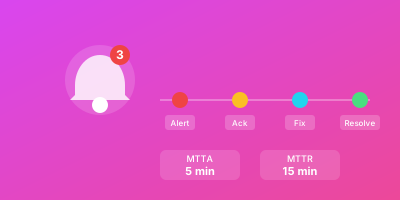
Step 4: Establish Escalation Policies
Define specific timeframes for escalation:
escalation_policy:
  name: "Platform Escalation"
  rules:
    - delay_minutes: 5
      targets:
        - type: user
          id: primary_oncall
    - delay_minutes: 10
      targets:
        - type: user
          id: secondary_oncall
    - delay_minutes: 15
      targets:
        - type: user
          id: team_lead
    - delay_minutes: 20
      targets:
        - type: user
          id: engineering_manager
Step 5: Document Expectations
Create clear documentation covering:
- Required response times by severity
- How to handle different alert types
- When to escalate versus resolve independently
- How to hand off ongoing incidents at shift changes
Step 6: Implement Scheduling Tools
Modern on-call management platforms handle:
- Rotation scheduling
- Shift swaps
- Vacation overrides
- Integration with alerting systems
Manual scheduling quickly becomes unmanageable as teams grow.
On-Call Rotation Best Practices
Successful programs share common characteristics.
Make It a Shared Responsibility
Include everyone on the team, including senior engineers and managers. When everyone participates:
- Knowledge silos are reduced
- There's greater motivation to reduce alert volume
- Team cohesion improves
Provide Meaningful Compensation
Options include:
- Additional pay during on-call periods
- Compensatory time off after demanding shifts
- Reduced workload expectations during rotation weeks
Invest in Reducing On-Call Burden
Track and improve these metrics:
- Alert volume per shift
- False positive rate
- Time to resolution
- Night pages per month
Set goals for improvement and celebrate progress.
Empower Responders
Define clear guardrails for independent action:
responder_authority:
  can_do_independently:
    - rollback_deployment
    - scale_up_resources
    - disable_feature_flag
    - restart_service
  requires_approval:
    - database_changes
    - customer_data_access
    - multi_region_changes
Create Smooth Handoffs
Establish handoff procedures between shifts:
- Brief incoming responders on ongoing issues
- Document recent changes and anticipated problems
- Use a shared channel for visibility
Support with Appropriate Tooling
Essential tools include:
- Mobile alerting apps with customizable notifications
- VPN and laptop access from anywhere
- Collaboration tools for coordinating response
- Documentation systems with searchable runbooks
Conclusion
Effective on-call rotation setup balances comprehensive coverage with sustainable workloads. By designing fair schedules and investing in tooling, you create a program that maintains reliability without burning out your team.
Getting Started
- Survey your team about their current on-call experience
- Analyze alert patterns to understand the true burden
- Identify the biggest pain points
- Prioritize improvements with the greatest impact
Related Guides
- Incident Management Best Practices — Define the incident process your on-call team follows
- Alert Fatigue Prevention — Prevent burnout by reducing unnecessary alerts during on-call shifts
- Runbook Automation Guide — Give on-call engineers automated runbooks for common issues
- Postmortem Template Guide — Review incidents from on-call shifts in blameless postmortems